
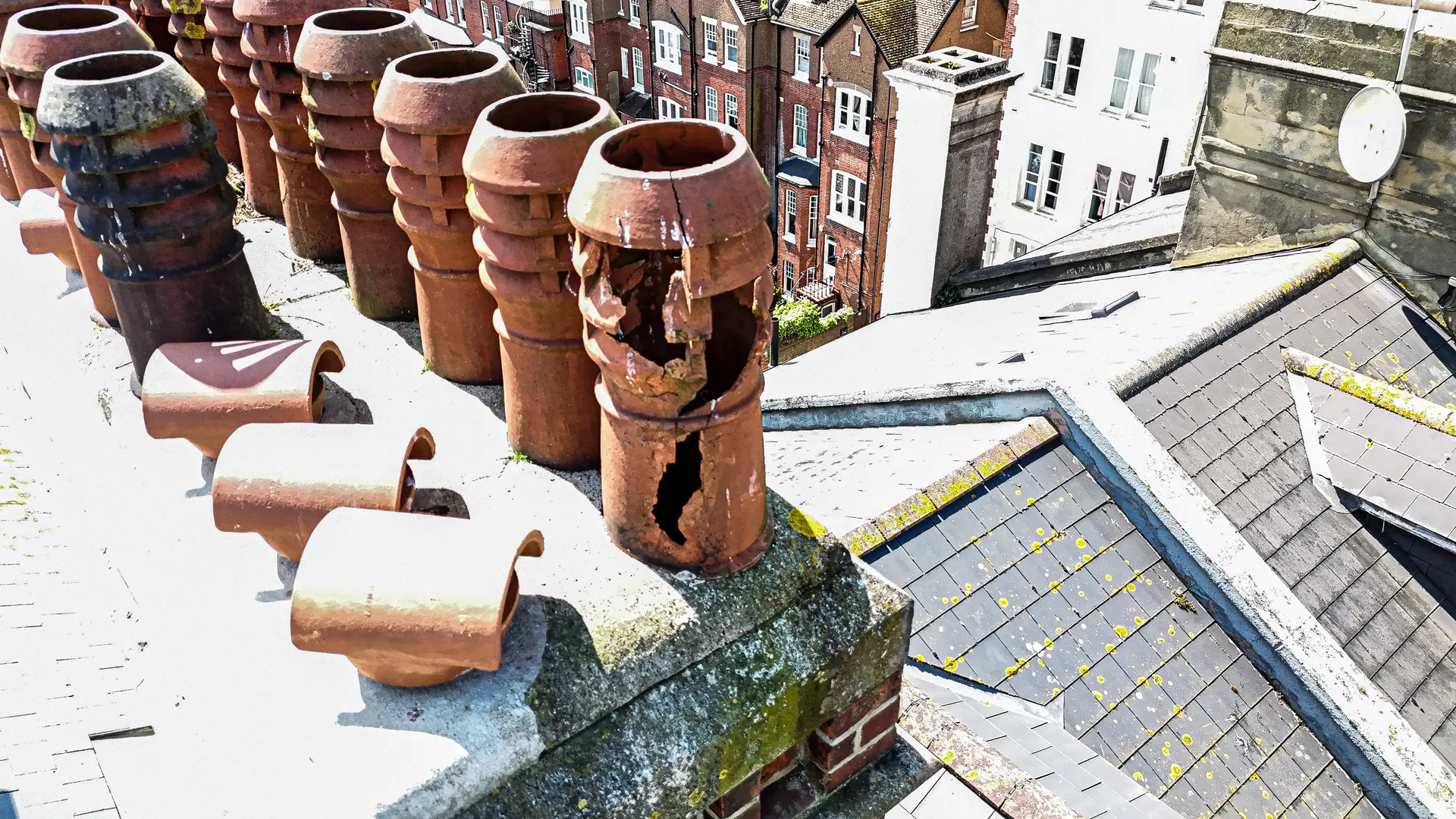
Housing complaints often escalate when residents feel unheard, repair teams lack clear evidence, or decisions rely on incomplete information. In many cases, better housing complaint condition evidence can help teams understand the problem sooner, communicate more clearly and plan the right next step with more confidence.
For complaints teams, repairs teams and housing managers, the challenge is not always a lack of action. It is often a lack of reliable visual information.
A damp patch, ceiling stain, mould issue or repeated leak may point to a wider external building defect that cannot be seen properly from ground level.
Drone surveys can help bridge that evidence gap.
A drone inspection will not solve every housing complaint, and it should not replace every type of survey. However, when teams need to inspect roofs, gutters, facades, windows, rainwater goods or hard-to-reach external areas, a planned drone survey can provide faster, safer and clearer condition evidence.
Why Better Condition Evidence Matters in Housing Complaints
Residents want to know that their concerns have been taken seriously. Housing teams need clear records, practical evidence and reliable information before they can make fair decisions.
Complaints can become harder to resolve when teams work with limited photos, unclear repair notes, or assumptions based on ground-level inspections. This can lead to repeat visits, delayed repairs, disputed findings and frustration for everyone involved.
Better condition evidence helps housing providers:
- Understand what is visible at the time of inspection.
- Identify external defects that may relate to internal symptoms.
- Share clearer information with surveyors, contractors and residents.
- Support repair decisions with a stronger visual record.
- Reduce guesswork when planning remedial work.
In complaint handling, evidence does more than support a technical decision. It helps build trust.
Damp, Mould and External Building Defects For Housing
Damp and mould complaints need careful handling because they can affect resident wellbeing, property condition and compliance expectations. While the visible issue may appear inside the home, the cause can often involve external building elements.
A stain on a ceiling may relate to a roof defect. Mould around a window reveal may connect to cold bridging, poor insulation, failed sealant or ventilation issues. Damp walls may result from blocked gutters, leaking downpipes, defective fascias or saturated brickwork.
Without a clear view of the building exterior, repair teams may only treat the symptom. Drone surveys help teams inspect the areas that often need ladders, scaffolding, cherry pickers or multiple site visits.
Using Drone Surveys to Support Safer Inspections
Drone inspections allow trained operators to capture high-resolution images of difficult-to-access areas without placing people at unnecessary height-related risk.
For housing providers, this can make inspections safer and more efficient, especially when teams need to review roofs, upper elevations, chimneys, gutters, parapets, flat roofs, cladding details or large blocks.
A drone-led survey can help teams gather evidence quickly while reducing disruption for residents and site teams.
Where Drone Surveys Can Support Complaint Resolution
A good survey starts with the question that the housing team needs to answer. The drone is only the method. The output must help the client make a better decision.
Drone site surveys can support complaint-related inspections across roof inspections, building inspections, housing disrepair investigations, thermal surveys, progress monitoring, pre-solar surveys and point cloud data capture.
- Roofs and coverings: Missing, slipped, cracked, or failing roof elements can let water in long before the cause is clear from inside the property.
- Gutters, fascias and soffits: Blocked, leaking or poorly aligned rainwater goods can saturate external walls and create repeated damp complaints.
- Windows and openings: Failed sealants, damaged flashings and staining around openings can show where water is tracking into the building fabric.
- Thermal patterns: Under the right conditions, thermal imaging can help identify cold areas, missing insulation, heat loss and areas at risk of condensation.
What Useful Condition Evidence Should Include
Drone survey work becomes valuable when it produces information that teams can review, share and act on. Housing teams do not just need attractive aerial photos. They need clear outputs that support decisions.
Drone site surveys can provide evidence in formats that help complaints teams, repairs teams, surveyors, asset managers and contractors understand what was captured.
- High-resolution external imagery of the affected building elements.
- Thermal images were conditions, and the brief made them appropriate.
- A clear visual record that can be reviewed by surveyors, repair teams and contractors.
- Sectioned overviews so teams can locate the defect quickly.
- Evidence that supports targeted remedial work instead of broad guesswork.
How Better Evidence Can Reduce Escalation
Complaints can escalate when residents feel their issue has not been fully investigated or when teams cannot clearly explain what was inspected, what was found and what happens next.
Better condition evidence gives housing teams a clearer basis for communication and action. Drone surveys can show defects that are difficult to inspect from the ground, such as blocked gutters, roof damage or external building issues.
This helps repair teams, contractors, and compliance leads make better-informed decisions, keep clearer records and target any further testing or specialist follow-up more effectively.
The Practical Value for Housing Teams
The real value of a drone survey is not the drone itself. It is the workflow around it.
A well-planned survey captures the right information safely, presents it clearly and gives housing teams evidence they can use. This can support faster decisions, more focused repairs and clearer communication with residents and contractors.
This gives complaints teams fewer blind spots, helps repair teams scope work more accurately, and provides housing managers with stronger records, clearer evidence and more confident next steps.
The Real Takeaway
If you need clearer condition evidence to support housing complaint handling, Drone Site Surveys can help.
Our team captures visual and thermal data for housing providers, repairs teams, surveyors and asset managers across the UK. We help you inspect hard-to-reach areas safely, understand external building conditions, and share clear evidence with the people who need it.
Contact Drone Site Surveys to discuss drone inspection support for housing complaints, damp and mould investigations, roof defects, building condition surveys and housing disrepair cases.