
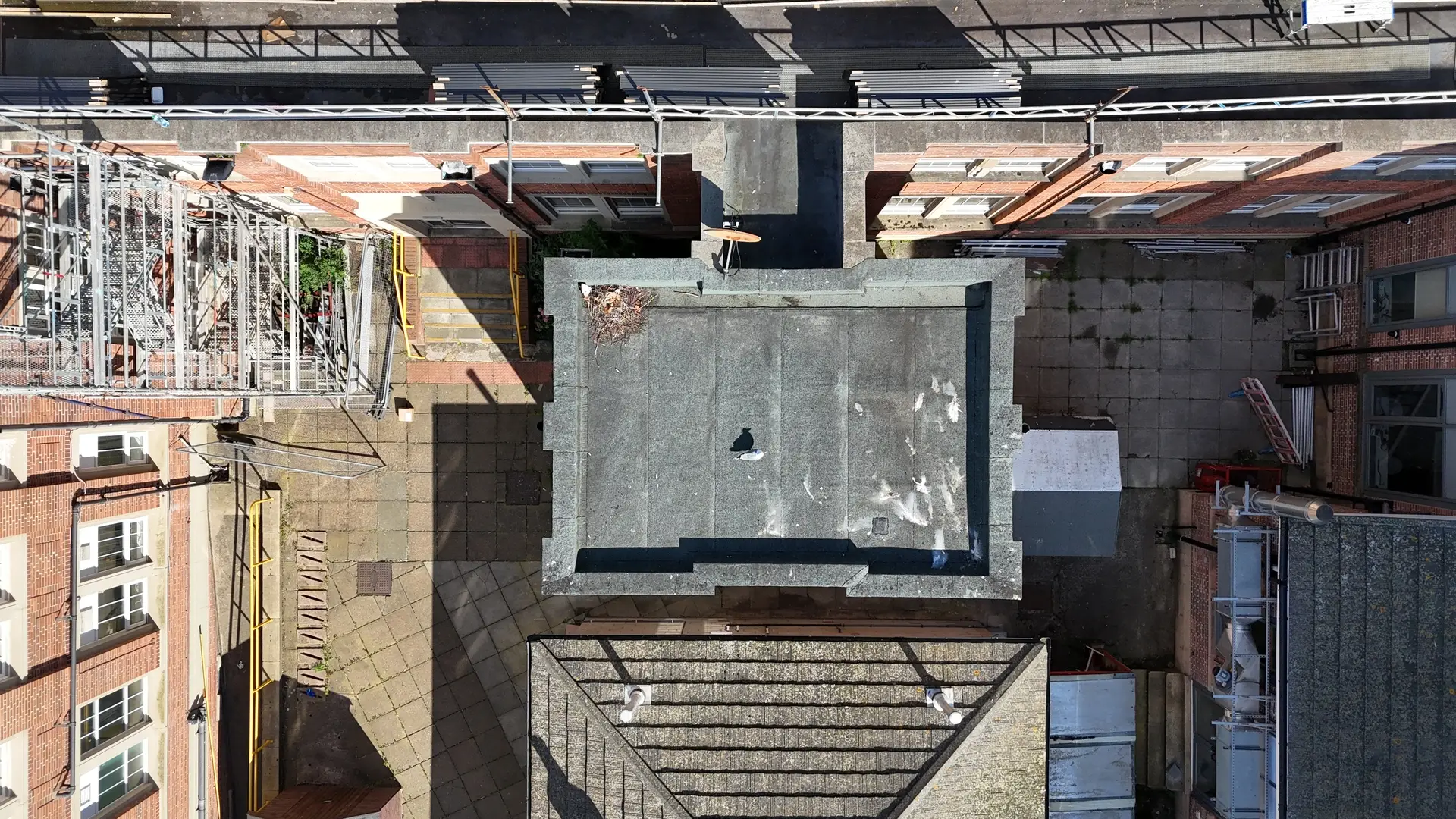
When deciding between drone surveys, scaffolding, cherry picker access, and rope access, price should not be the sole factor. Procurement, finance, asset management, and health and safety teams need to weigh costs, disruptions, site risks, inspection quality, and how quickly they need evidence.
Many organisations now compare drone surveys vs. scaffolding/cherry picker access because they need reliable visual information before committing to more expensive or disruptive methods. A drone will not replace every traditional access option, but it can often help teams decide what level of access they actually need.
A well-planned aerial inspection can capture roof condition images, gutter details, facade defects, chimney issues, thermal patterns, site progress records and high-level building views. These outputs support repair plans, contractor briefings, budget decisions and internal records.
Which Access Method Should You Choose?
Choose a drone survey for quick, safe visual evidence of roofs, gutters, facades, chimneys, cladding and high-level areas. Select scaffolding when trades require stable access for repairs or detailed hands-on checks. Bring in a cherry picker for short, close-range inspections where space and ground conditions support safe setup. Consider rope access for towers, elevations and restricted locations that make fixed platforms difficult.
The best method depends on the question you need to answer. Are you checking visible roof damage, investigating a leak, reviewing disrepair, assessing planned maintenance, confirming storm damage or preparing a repair specification? The access method should follow the evidence required.
Drone Surveys vs Scaffolding Cherry Picker Access: Cost and Value
Traditional access methods often carry higher setup costs. Scaffolding may involve design, labour, transport, permits, site protection, pavement licences and days of installation. These costs can make sense for repairs or prolonged work, but they may be excessive when a team only needs initial visual evidence.
Cherry pickers can give flexible access, particularly on open sites with suitable ground conditions. However, they may still require trained operators, parking space, exclusion zones, traffic management and planning around residents, pedestrians or live business operations.
Rope access works well on facades, towers and difficult elevations. It suits targeted inspections and some repair tasks, but it relies on trained technicians, safe anchor points and suitable site conditions.
Drone surveys often add value at the early investigation stage. The aircraft can collect high-resolution images from angles that ground-based checks cannot reach. This helps teams decide whether scaffolding, a mobile platform, rope access, a contractor visit or no immediate action is the best next step.
Speed and Disruption: Why Early Evidence Matters
Speed matters when teams need decisions quickly. A drone inspection can often be completed with less disruption than traditional access, especially where the task involves external visual checks rather than physical work.
For housing providers, estates teams and facilities managers, this can reduce delays. A repairs manager may need evidence before raising work orders. An asset manager may need to compare the roof condition across several buildings. A health and safety lead may need a record of what was visible.
Clear aerial evidence also improves contractor conversations. Instead of asking suppliers to price work from vague descriptions, teams can share labelled images, roof overviews and defect locations.
Safety: Reducing Work at Height During Initial Checks
Working at height remains one of the main risks in building inspection and maintenance. Scaffolding, cherry pickers and rope access can all be safe when competent teams plan and manage them properly. The key question is whether people need to work at height at the first stage.
A drone survey can reduce the need for early physical access by capturing visible evidence from the air. This does not remove all risk, and it does not replace proper risk assessment, but it can help teams avoid unnecessary exposure while they decide what to do next.
A responsible provider should clarify flight limitations, site constraints, weather conditions, privacy considerations, and the need for further hands-on inspection.
When Traditional Access Still Makes Sense
Drones cannot touch materials, lift roof coverings, test fixings, clear gutters, take samples or confirm hidden defects behind a surface. They also cannot replace intrusive investigation where the cause of a problem sits beneath the visible layer.
Scaffolding may be the right choice when repair teams need stable access over several days or when several trades need to work on the same elevation. A cherry picker may suit short, targeted work where setup is safe and practical. Rope access may suit complex buildings where other methods cannot reach specific areas efficiently.
This balanced approach matters. Drone Site Surveys uses aerial inspection methods to support evidence gathering, but the findings should always be read alongside the limits of what a visual inspection can confirm.
What Procurement and Asset Teams Should Ask Before Booking
Before comparing drone surveys vs. scaffolding cherry picker access, teams should define the decision they need to make. A strong survey brief should cover:
- Inspection Purpose: State whether you need defect imagery, roof condition evidence, thermal data, measurements, progress records, mapping or a formal report.
- Competence and Permissions: Ask about CAA requirements, pilot competence, insurance, site planning, weather checks and how the provider manages operational risk.
- Deliverables: Confirm whether you will receive labelled images, sectioned roof overviews, thermal files, annotated reports, measurements, portals or downloadable records.
- Method Limits: Ask what the survey can and cannot confirm. A credible inspection provider should explain when drone evidence should lead to further intrusive or close-up investigation.
- Data Handling: Ask how imagery will be stored, shared and retained. Survey images may capture homes, vehicles, neighbouring land or residents, so responsible handling matters.
What Useful Drone Survey Outputs Look Like
A useful drone survey should do more than provide a folder of images. The output should help teams review, share and act on their findings.
Good outputs may include:
- High-resolution images labelled by elevation or roof section
- Annotated defect photographs
- Site or roof overview plans
- Thermal imagery with clear caveats
- Secure online access to imagery and reports
- Practical observations linked to next-step decisions
Drone site surveys can support roof inspections, building inspections, thermal surveys, housing disrepair investigations, progress monitoring and site measurement projects, where aerial evidence suits the brief.
Better Evidence Before Bigger Access Decisions
Drone inspections and traditional access methods should not be treated as rivals. They work best when teams use them in the right order for the right reason.
Scaffolding, cherry pickers and rope access remain essential for many repairs, close inspections, and physical works. Drone surveys add value when teams need safer, faster external evidence before choosing heavier access.
For procurement, finance, assets, and health and safety teams, the key question is whether the survey will provide useful evidence, clear reporting, and practical next steps.
When the brief is clear, an aerial survey can reduce blind spots, improve records, support contractor pricing, and help teams choose the most suitable access method with greater confidence.