
Void turnaround depends on clear, timely decisions. When a home becomes empty, housing teams need to understand its condition quickly, identify essential repairs and return the property to use without unnecessary delay.
External defects can make this process harder. Problems with roofs, gutters, chimneys, parapets, elevations, windows or drainage details are not always easy to inspect from ground level. If the issue cannot be seen clearly, teams may need repeat visits, access to equipment or further specialist inspections before they can make a confident decision.
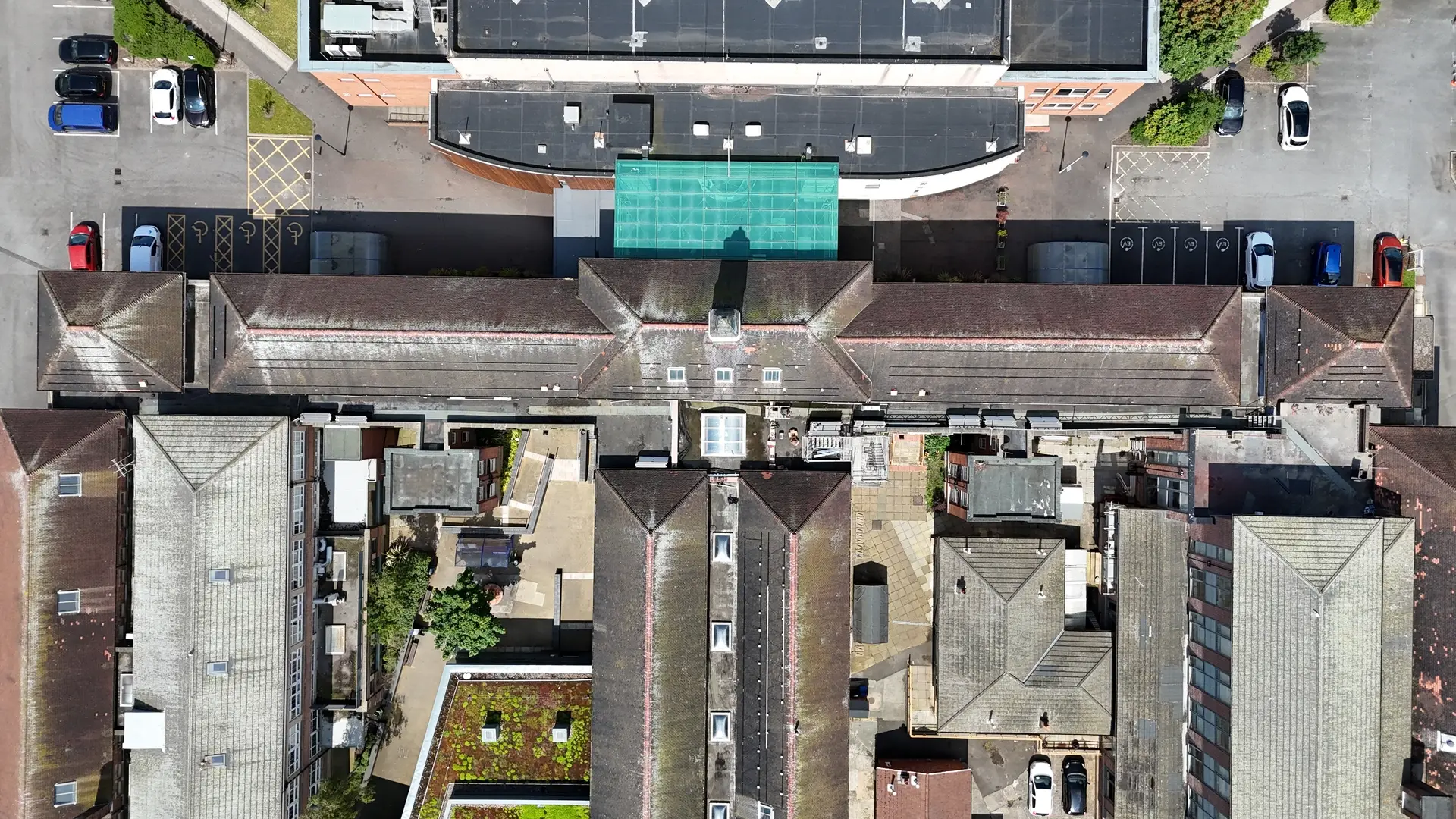
Drone surveys can support void turnaround and planned maintenance by giving housing providers clearer visual evidence from areas that are difficult or unsafe to inspect from the ground. While they don’t replace every inspection method, they can assist teams in comprehending visible external conditions earlier and determining the necessary next steps.
Why External Evidence Matters During Void Turnaround
Void works often involve repair teams, surveyors, contractors, asset managers and housing officers. Accurate information may be necessary for each team before re-letting a property.
Delays often happen when an issue appears simple at first but becomes more complex once a better view is available. For example, a ceiling stain may suggest a roof covering defect, blocked gutter or failed flashing. Dampness near a chimney breast may relate to masonry, leadwork, ventilation or water tracking from another detail. Water ingress around a window may involve sealant, brickwork, lintels or roof details above.
Without a clear external view, teams can make assumptions. This can lead to incomplete scopes of work, missed defects or further visits that slow the process down.
A drone survey helps reduce uncertainty by providing visual evidence from height. In suitable cases, this can support an early assessment before committing to scaffolding, mobile towers or powered access.
How Drone Surveys Support Planned Maintenance
Planned maintenance relies on reliable condition data. Asset managers need to prioritise budgets, group similar works, understand risk and plan repairs before defects become more disruptive.
Drone surveys can support planned maintenance by giving teams a consistent visual record of building condition across individual homes, blocks or wider estates. They can help identify visible deterioration such as slipped roof coverings, damaged flashings, blocked gutters, vegetation growth, cracked render, weathered masonry, defective pointing, loose copings and other external issues that may affect future works.
This evidence can help housing providers compare similar properties. Where homes share the same age, roof type, exposure or construction detail, aerial inspection can provide a more consistent way to review external condition and inform future programmes.
For larger portfolios, the value is strongest when drone survey evidence feeds into a wider asset strategy. The inspection should support decision-making, not sit separately from repairs, compliance or planned works records.
When Should Housing Teams Use a Drone Survey?
Drone surveys are most useful when a team needs a better view of an external area before deciding the next step.
Common reasons include:
- Investigating suspected roof leaks or gutter defects
- Checking chimneys, parapets, valleys, flashings and roof junctions
- Reviewing elevations, render, masonry, windows and rainwater goods
- Assessing whether heavier access equipment is needed
- Gathering evidence for contractor scoping and pricing
- Recording the visible condition before or after repair works
- Supporting disrepair investigations where external defects are relevant
- Reviewing groups of similar properties for planned maintenance
The best results come from starting with a clear question. Is the roof likely to delay the re-let? Is the guttering contributing to damp? Does the contractor need better access information? Should the asset team programme work now or monitor the issue?
Once the decision is clear, the survey can be planned around the right outputs.
What Should be Included in Useful Drone Survey Outputs?
A drone inspection is only valuable if the results are clear, organised and easy to use. A folder of images may look impressive, but it will not always help repairs or asset teams make decisions.
Useful drone survey outputs may include:
- Labelled photographs showing the location of visible defects
- Roof overviews and sectioned elevation images
- Condition notes written in plain language
- Access observations for contractors or surveyors
- Measurements were appropriate
- Recommendations for repair, monitoring or further inspection
- Dated visual records for audit and evidence purposes
- Thermal imagery where conditions and survey aims make it suitable
Thermal surveys can be helpful in some cases, such as reviewing possible heat loss, insulation gaps or moisture-related patterns. However, thermal information needs careful interpretation and should usually be treated as supporting evidence, not a standalone conclusion.
Drone Site Surveys provides structured inspection outputs for housing and property teams, helping the information support repair diagnosis, contractor briefing, planned works and long-term asset records.
How Drone Evidence Helps Teams Make Better Decisions
The value of a drone survey is not simply that it captures images from the air. The value is that it gives teams clearer evidence earlier in the process.
Void teams can identify external defects that may delay re-let timescales. Repair teams receive a clearer brief before instructing contractors. Asset managers gain evidence to support planned maintenance and prioritise future works. Compliance and customer-facing teams also create a dated record of visible conditions at the time of inspection.
Used well, drone surveys can help housing providers reduce blind spots, avoid unnecessary assumptions and decide whether further access or specialist investigation is genuinely required.
Can Drone Surveys Reduce the Need for Scaffolding?
Drone surveys do not remove the need for scaffolding in every case. If physical repair, close-up, hands-on inspection or material testing is required, access equipment may still be necessary.
However, drone evidence can help teams decide whether that access is needed, where it is needed and what the scope should include. This can be particularly useful at the early assessment stage, where the aim is to understand the visible condition before committing to more costly access methods.
Supporting a More Evidence-Led Maintenance Process
Housing teams are under pressure to improve response times, manage budgets and maintain safe, decent homes. Better evidence will not solve every operational challenge, but it can reduce uncertainty at points where decisions often slow down.
Drone surveys can support void turnaround, planned works, roof condition reviews, building inspections, thermal assessments, disrepair investigations and contractor scoping. Connecting the evidence to a clear workflow maximises its value.
The aim is not to add another inspection step for every property. The aim is to help teams understand the building sooner, target the next action better and keep a clearer record of visible external conditions.
Key Takeaway
Faster void turnaround depends on early clarity. Planned maintenance depends on reliable condition evidence. Using drone surveys for the right properties, the right questions, and the right outputs can support both.
For housing providers, the real benefit is not the drone itself. It is clearer evidence, safer inspection planning and more confident decision-making across repairs, voids and asset management.