
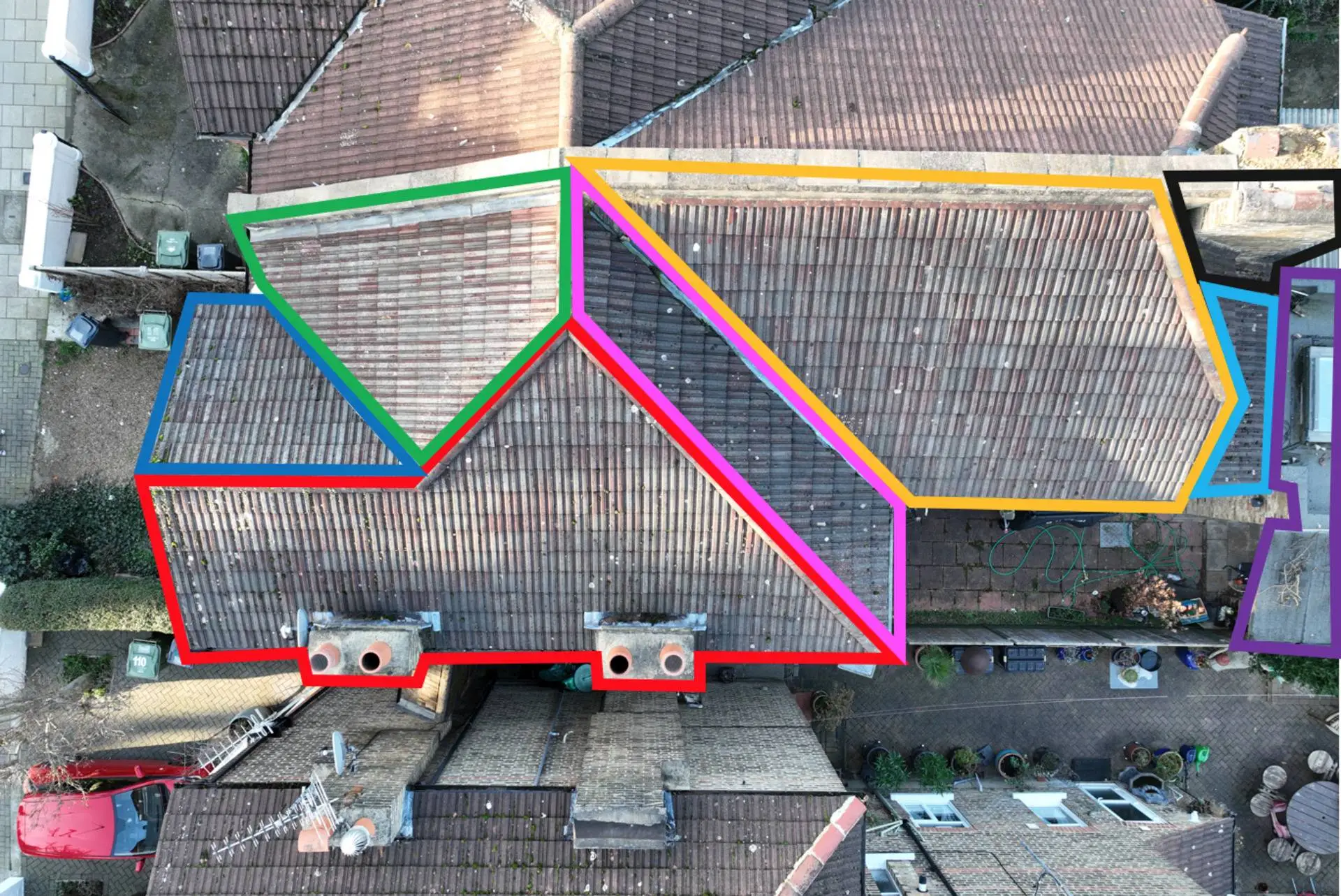
TSM repair performance survey data helps housing providers understand where tenants may be dissatisfied with repairs, maintenance, communication, or completed work.
Drone survey data can support that insight by providing clear external evidence of roofs, gutters, facades, chimneys, parapets and other difficult-to-access areas.
Housing teams can combine resident feedback with accurate visual evidence to diagnose issues more confidently, brief contractors more clearly and improve how they plan, evidence and communicate repairs.
Why TSM Data Matters for Repair Teams
Tenant Satisfaction Measures, often referred to as TSMs, give housing organisations a structured view of resident experience. They can highlight where confidence in repairs, maintenance, communication and property condition may be weakening.
For customer insight teams, repair managers and asset leads, this data is valuable because it can show patterns that may not be obvious from individual complaints or isolated repair records. Residents may report delays, repeat visits, poor communication, unresolved defects or a lack of confidence in completed work.
However, survey results alone rarely explain the full cause of resident frustration. A low satisfaction score may highlight a problem, but it does not always explain whether access difficulties, unclear diagnosis, poor contractor information, ageing building components or communication gaps caused the issue.
That is where practical evidence becomes important.
How Drone Survey Data Supports TSM Repair Decisions
Drone survey data gives housing teams a clearer visual record of external building conditions where the task is suitable. Instead of relying only on ground-level photographs, resident descriptions or limited access views, teams can inspect areas such as roofs, gutters, elevations and high-level details from a safer standoff position.
For drone site surveys, the value is not simply in capturing aerial images. The value is in helping teams move from broad TSM insight to practical repair action.
A well-planned drone inspection can help answer questions such as the following:
- Is there a visible roof defect contributing to repeated repair requests?
- Are gutters blocked, overflowing or damaged?
- Are chimneys, flashings, parapets or roof coverings showing visible deterioration?
- Is it a facade showing signs of weathering or water ingress risk?
- Does the contractor need clearer evidence before pricing or planning the work?
- Is scaffolding, a cherry picker or another access method genuinely needed for the next stage?
- Can completed external works be visually checked after the repair?
This helps housing providers reduce uncertainty before committing labour, accessing equipment and budgeting.
From Resident Feedback to External Evidence
The best repair workflows combine resident reports, repair history, and building condition evidence.
TSM data finds pressure. Service history is in the repair records. Drone surveys can confirm external or high-level building issues visually.
The housing staff may get recurrent allegations of water ingress in an upper-floor flat. TSM data may indicate repair handling dissatisfaction, while repair history may suggest recurring visits.
Then, a drone survey can check visible roof coverings, gutters, flashings, parapets and adjoining elevations for exterior defects.
This does not exclude professional judgement. The repairs and asset team has more evidence before making a decision.
Where Visual Surveys Add Value to TSM Data
Drone surveys deliver the most value when teams link the inspection to a clear decision. Teams should not treat them as a generic photography exercise. A focused brief helps the survey answer the specific repair question more effectively.
- Likely defect sources: Roofs, gutters, chimneys, parapets, facades, flashings and windows can all be reviewed from above or from a safe standoff.
- Access constraints: Aerial imagery helps teams understand whether scaffolding, a cherry picker or specialist access is really needed for the next stage.
- Contractor scoping: Clear visuals can reduce ambiguity in the repair brief and help contractors price the work more confidently.
- Completion evidence: Follow-up imagery can help confirm whether visible works have been completed as expected.
What Good Drone Survey Outputs Should Include
The difference between useful drone data and a folder of attractive photographs is structure. Housing teams need information they can review, share and act on.
A good survey output should include:
- Clear imagery that supports repair diagnosis and contractor briefing
- A visual record that can be shared across repairs, assets and customer teams
- Sectioned overviews that make defects easier to locate on a building or site
- Evidence that helps teams decide whether further access is required
- Consistent reporting across multiple homes, blocks or estates
- Secure access to imagery, data and reports where required
- Practical outputs that support next-step decisions
Drone site surveys can provide imagery, data and reports through a secure online portal, making it easier for teams to review findings, share evidence and connect survey outputs with repair workflows.
How Housing Teams Can Use TSM Data More Effectively
Teams increase the value of TSM repairs performance survey data when they connect it to a repeatable workflow.
A practical approach may look like this:
- Review TSM results to identify repair-related themes.
- Compare resident feedback with repair history and property records.
- Identify cases where external conditions, height or access may be part of the issue.
- Use a drone survey where visual evidence can support the next decision.
- Share structured outputs with repairs, assets, contractors and customer teams.
- Use the evidence to improve contractor briefs, resident updates and follow-up checks.
- Record outcomes to support future planning and service improvement.
This turns survey insight into practical action. It also helps teams avoid treating tenant feedback as a standalone reporting exercise.
Why Evidence Matters for Resident Communication
Poor communication is often a major source of frustration during repair journeys. Residents may think the housing team has not understood their issue, has taken too long to complete the repair or has failed to resolve the problem during previous visits.
Visual evidence helps housing teams explain what they found and what they will do next. It can also support clearer internal communication between departments.
For example, customer teams may need to explain why a repair requires specialist access. Repairs managers may need to brief a contractor. Asset leads may need to decide whether an isolated repair or a wider programme of works is more appropriate.
Clear evidence helps each team work from the same information.
Why Housing Teams Use Drone Site Surveys
Drone Site Surveys provides structured external inspection evidence to housing providers, asset teams, maintenance managers, and property specialists.
The topic goes beyond aerial photography. To help teams identify visible building conditions, access limits, and repair priorities before proceeding.
Survey results can include high-resolution imagery, sectioned visual records, marked-up findings, and secure online reports and data. When appropriate, drone surveys can help teams inform contractors, decrease uncertainty, and evaluate hard-to-reach places safely.
Drone surveys cannot replace all inspections. Internal access, intrusive investigation, expert testing, or in-person surveyor assessments are needed for some concerns. Drone site surveys provide visual data to improve repair or asset management decisions.
When a Drone Survey May Not Be the Right Option
Drone surveys are highly useful in the right context, but they are not the answer to every repair issue.
A drone survey may not be suitable where
- The issue is internal and requires access inside the property.
- The defect cannot be assessed visually
- Intrusive testing is required.
- The main problem is communication rather than building conditions.
- Site conditions, airspace restrictions or safety factors make drone work unsuitable
- A specialist contractor or surveyor needs to attend directly
Teams achieve the best results when they choose the right inspection method for the decision they need to make.
Key Benefits for Repair Managers and Asset Leads
Using drone survey evidence alongside TSM repairs performance survey data can help housing organisations do the following:
- Move from broad satisfaction insight to the practical building of evidence
- Reduce uncertainty around external defects
- Improve contractor scoping and repair briefs
- Support safer inspection of high-level or difficult-to-access areas
- Reduce avoidable repeat visits in suitable cases
- Improve evidence sharing between repairs, assets and customer insight teams
- Support clearer resident updates
- Create a more consistent approach across multiple properties
The result is a more evidence-led repair process.
Final Thoughts
TSM repairs performance survey data can indicate satisfaction pressure, but it doesn’t necessarily explain what needs to change.
Housing teams may make better judgements, minimise ambiguity, and improve repair planning and communication by combining resident insight with correct external evidence.
Drone surveys are just one repair performance step. The correct questions, evidence, and uses to promote safer, clearer, and more consistent repair workflows are the true value.
Drone site surveys can assist housing providers in implementing TSM insight by providing visual proof for repair decisions.