
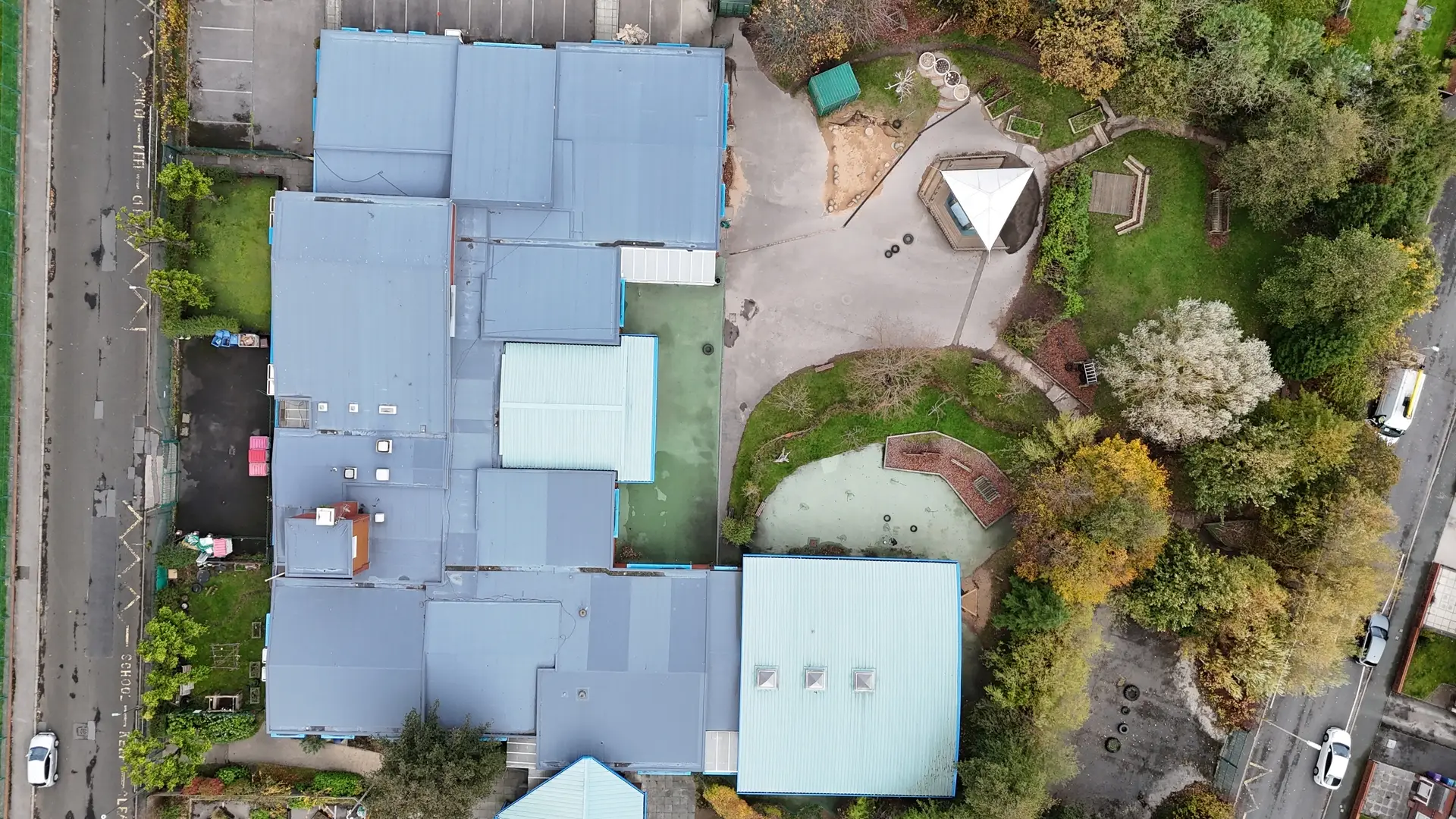
A thorough safer inspection process should help improve homes without making life harder for the people living in them. For housing providers, resident engagement teams, and asset managers, this process is especially important in supportive housing, senior living, social housing, and other sensitive residential settings.
Traditional inspections can include ladders, scaffolding, contractor visits, repeated access requests, and disruptions to daily routines. Teams may still need some of these procedures, but better external evidence often helps them understand the issue before they decide whether to arrange more intrusive access.
This situation is where safer accessible housing inspections and drone surveys can play a useful role. A well-planned aerial survey can record visible external conditions across roofs, gutters, chimneys, façades, windows, drainage details, and high-level areas that are difficult to safely inspect from the ground.
Drone surveys do not replace every inspection method. Drone surveys cannot confirm hidden defects, carry out material testing or replace a specialist assessment when the situation requires one. Their value lies in helping housing teams see more clearly, plan more carefully and make better-informed decisions.
Why Safer Housing Inspections Matter
Safer housing inspections carry both a practical responsibility and a social one. The practical goal is to identify defects, risks, and maintenance needs. The social aim is to do so in a way that respects residents and avoids unnecessary disruption.
Some residents may have mobility challenges, health concerns, caregiving responsibilities, anxiety about visitors, or limited availability for appointments. Repeated visits can also create frustration, especially when different teams need access to investigate the same issue.
Clear external inspection evidence can reduce uncertainty. Housing teams can record blocked gutters, roof defects, cracked render or damaged flashing from outside the property, then review the findings before deciding whether they need internal access.
For asset managers, this evidence also supports better planning. Instead of relying solely on ground-level photographs or written notes, teams can review detailed imagery across roof lines, elevations, and shared building areas. This can make it easier to spot visible patterns, prioritise work and brief contractors accurately.
Where a Drone Survey Can Help
A good drone survey starts with the question the client is trying to answer. Is the roof leaking? Are gutters failing? Is it a facade showing signs of weathering? Is heat loss coming from a particular detail? Does a contractor need clearer access information before pricing the work?
Once the question is clear, the team can plan the survey around useful outputs rather than the novelty of the drone. Drone Site Surveys handles roof inspections, building inspections, thermal surveys, pre solar surveys, point cloud data, progress monitoring and housing disrepair investigations, so the team can match the method to the decision they need to make.
- External condition: Inspect roofs, gutters, facades, chimneys, windows and visible high-level defects from outside the home.
- Resident disruption: Plan surveys to minimise unnecessary appointments, access requests and repeat visits.
- Clear communication: Use imagery to help non-technical stakeholders understand what has been found.
- Follow-up works: Use the survey to decide whether targeted access, repair or further specialist inspection is needed.
What Housing Teams Should Expect from a Useful Survey
Housing teams need more than a folder of images. Housing teams require information that they can review, share, and act upon.
A useful survey should give housing teams organised visual evidence, location references and reports that clearly show what the team inspected and where they found visible issues. Sectioned overviews can be particularly helpful for larger sites, blocks of flats, sheltered housing schemes, or estates with multiple buildings.
Strong survey outputs can support:
- More targeted repair planning
- Clearer contractor briefings
- Better resident communication
- Reduced uncertainty around hard-to-access defects
- Fewer unnecessary repeat visits
- Improved records of visible external condition
- Better decisions about whether further specialist inspection is needed
This process does not remove the need for professional judgement. Instead, it provides housing teams with clearer evidence before they decide the next step.
Supporting Resident Trust Through Safer and Clear Evidence
Residents often want simple answers to three questions:
- What was inspected?
- What was found?
- What happens next?
Clear imagery helps housing teams answer these questions more confidently. A resident may not be able to see a roof defect, blocked outlet or high-level crack from their home, but a clear inspection image can make the explanation easier to understand.
This can also help resident engagement teams manage expectations. If further investigation is required, the reason can be explained more clearly. If the team doesn’t find any visible external issues, they can demonstrate what they checked and explain the need for an alternate route.
Effective communication matters because inspections are not just technical exercises. They affect people’s homes, routines and sense of security. A more transparent inspection process can help reduce confusion and build trust.
Making Inspections Less Intrusive
Inclusive inspection practice is not only about disability access. It is also about reducing unnecessary disruption for people whose homes are being inspected.
Drone surveys can help by gathering external information without immediately requiring internal access, scaffolding or multiple contractor visits. This can be particularly useful when residents are vulnerable, elderly, anxious, medically restricted, or living in supported environments.
In practice, such technology can help housing teams move from a broad inspection approach to a more targeted one. Rather than sending several people to investigate an unclear issue, teams can first review external evidence and decide whether repairs, access visits, or specialist inspections are justified.
When a Drone Survey Is Not Enough
Drone surveys have clear limits. They cannot penetrate materials, verify concealed moisture, assess structural integrity, or substitute for necessary intrusive investigations.
Some issues may still require internal access, moisture readings, scaffold inspections, sample testing, structural reviews, roofing contractor assessments, or other specialist input.
A responsible approach recognises these limits. A drone survey should help identify the next best step, not overstate what aerial imagery can prove. In some cases, it may show that a repair is straightforward. In others, it may confirm that further investigation is required.
This balanced approach supports safe decision-making, reduces guesswork and helps housing teams choose the right method at the right stage.
Final Thoughts
Safer and more accessible housing inspections are not just about technology. They are about using the right method in the right way.
Drone surveys can help housing providers, resident engagement teams, and asset managers gather clearer external evidence with less disruption. When planned properly, they can support repair decisions, improve contractor briefings, reduce unnecessary access requests and make residents’ conversations easier.
The drone is only one part of the process. The real benefit comes from asking the right inspection question, capturing useful evidence and presenting findings in a format that helps people act.
For housing teams, this creates a more practical route to safer homes, clearer communication and better-maintained communities.