
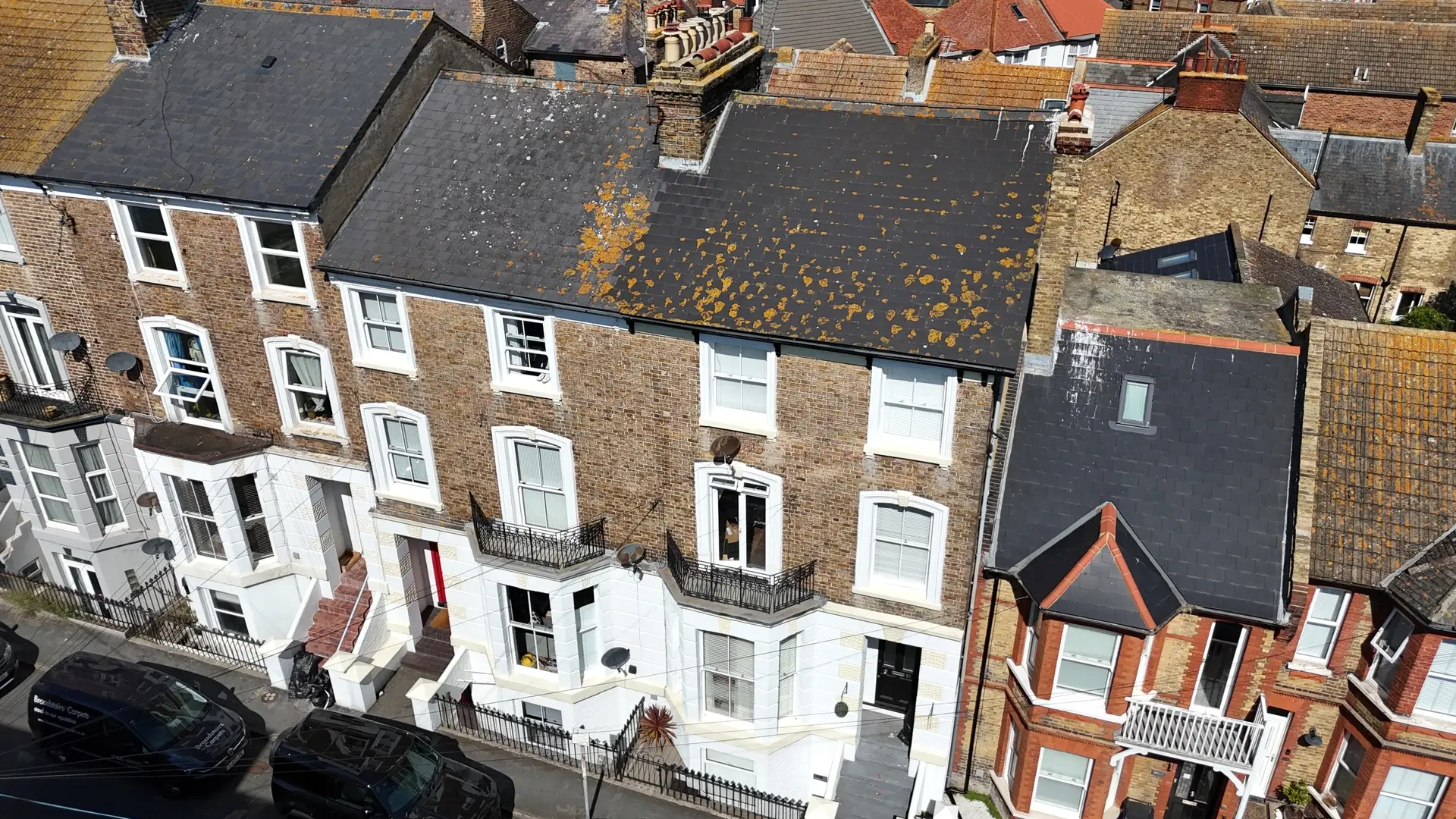
In senior living, retirement housing, and supported accommodation, it is essential to plan building inspections around both the residents and the property.
Drone surveys can help housing and asset teams inspect hard-to-access external areas, such as roofs, gutters, chimneys, façades, windows and high-level defects, with less disruption to the people living on site.
They do not replace every survey method, but they can provide clear visual evidence that helps teams decide whether repair, monitoring or further investigation is needed.
Why Low Disruption Inspections Matter in Senior Living
In senior living and supported housing, the inspection method matters as much as the findings. Residents may be older, vulnerable, less mobile or more sensitive to unexpected activity around their home. Poorly planned inspections can confuse, result in repeat visits, cause access issues and create unnecessary concern.
A low-disruption inspection approach helps housing teams gather the information they need while respecting resident comfort, privacy and daily routines. In some cases, traditional methods like ladders, scaffolding, or close-access inspections may still be necessary. However, we can review many early-stage external issues without entering homes or arranging multiple appointments.
Drone surveys can support this process by capturing roof-level and elevation evidence from outside the building. This gives asset managers, repair teams and contractors a clearer view of hard-to-access areas before deciding on the next step.
What Can a Drone Survey Inspect?
A drone survey should always start with a clear question. The technology is only useful when it helps answer a building-related concern.
Common inspection questions include:
- Is there visible roof damage?
- Are gutters blocked, leaking or misaligned?
- Are there signs of slipped tiles, failing flashings or damaged weathering?
- Are chimneys, parapets or high-level details showing visible defects?
- Is water ingress linked to an external building issue?
- Does a contractor need clearer information before pricing works?
- Is further specialist inspection required?
For senior living schemes, retirement properties and supported accommodation, drones are commonly used to inspect roofs, gutters, façades, chimneys, windows, high-level masonry, visible cracking, external drainage details and general building condition.
The main benefit is not simply the aerial view. The value comes from organised evidence that helps teams make decisions with less guesswork.
Useful Outputs for Housing Asset Teams
A drone survey should produce more than a folder of photographs. For evidence to be useful, it needs to be clear, structured and easy to share with different stakeholders.
Good drone survey outputs may include:
- High-resolution imagery of roofs and elevations
- Annotated images showing the location of visible defects
- Roof plans or sectioned overviews
- Thermal images were suitable
- Condition evidence for repair planning
- Progress records for ongoing works
- Photographic records for housing disrepair investigations
- Evidence to support contractor scoping and access planning
Housing providers can reduce uncertainty before repairs begin. Contractors can use the evidence to prepare more effectively, while resident teams can explain the findings with greater clarity and transparency.
How Drone Surveys Reduce Resident Disruption
In live residential environments, planners should prioritise people during every inspection. Drone surveys help teams reduce disruption by limiting early access requirements, cutting repeat visits and identifying defects before they arrange more intrusive work.
This can be especially useful where residents may need additional reassurance or where access coordination is difficult. Teams can usually complete a planned drone inspection from outside the building, explain the visit clearly in advance and keep disruption to daily life low.
That said, resident confidence depends on good planning. Teams should tell residents why they need the survey, when it will happen, which areas they will inspect and how they will protect privacy. This is particularly important in senior living and supported housing settings.
The Role of Thermal Drone Surveys
Thermal drone surveys can provide additional insight where heat loss, insulation performance or moisture-related concerns need closer review. They may help identify unusual temperature patterns around roofs, junctions, façades or other external details.
However, thermal data must be interpreted carefully. Weather, time of day, heating patterns, building use, material type, and surface conditions can all affect the results. Thermal imaging should not be treated as a standalone diagnosis.
Used responsibly, it can help highlight areas that may need further investigation. This supports better maintenance planning without overstating what the data can prove.
Safety, Access and Privacy Considerations
Drone surveys can reduce the need for some early-stage working at height activities, which can be useful on occupied residential sites. However, safe drone work still requires careful planning.
A responsible survey provider should consider site layout, weather, take-off and landing areas, nearby people, neighbouring properties, airspace, privacy and data handling. In supported housing environments, communication with staff and residents is also part of good practice.
The aim should be to collect the right evidence safely and respectfully, not simply to fly a drone because access is difficult.
When a Drone Survey Is Not Enough
Drone surveys have clear limitations. They cannot lift roof coverings, test fixings, open up construction details or confirm hidden defects. Poor weather, restricted visibility, overhanging structures, or areas inaccessible to the drone may also affect its performance.
For example, a drone may show staining near a gutter, visible cracking or damaged roof coverings. Teams may still need further inspection to confirm the exact cause, especially when they suspect water ingress, structural movement or hidden deterioration.
This does not reduce the value of the drone survey. It makes the next step more targeted. Instead of sending contractors to investigate a broad issue with limited information, asset teams can provide clearer evidence and focus attention on the most relevant areas.
What Good Practice Looks Like
A good drone survey for senior living or supported housing should be the following:
- Planned around a specific building question
- Communicated clearly to residents and staff
- Carried out with privacy and safety in mind
- Presented in a format that asset teams can understand
- Honest about what was visible and what was not
- Clear about whether further inspection is needed
Drone Site Surveys supports roof inspections, building inspections, thermal surveys, pre-solar surveys, point cloud data, progress monitoring and housing-disrepair investigations. In each case, teams should shape the inspection method around the decision the client needs to make.
Final Thoughts
Drone surveys for senior living and supported housing are most useful when they form part of a thoughtful, evidence-led inspection process. They can help housing teams inspect difficult external areas, reduce unnecessary disruption and communicate building issues more clearly.
They are not a shortcut or a replacement for professional judgement. Their strength is in helping asset teams see more, understand issues earlier and plan the next step with greater confidence.
For resident-focused housing environments, that balance matters. The best inspection is not only the one that finds the defect. It is the one that provides reliable evidence while protecting the people who live there.