

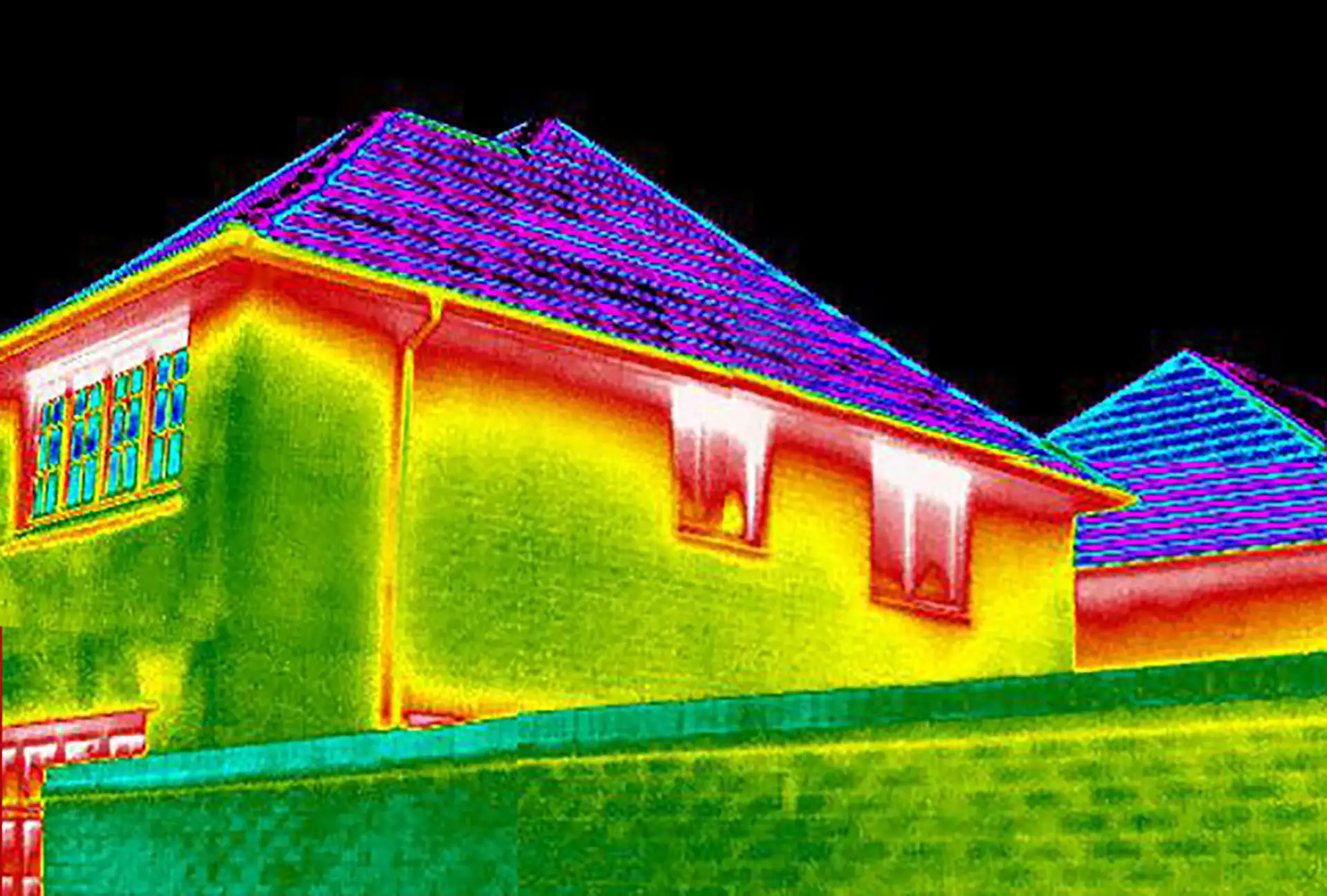
The best time for a thermal imaging survey of a building is a cold, dry, still night between October and March, with the heating on and at least 10°C between the temperature inside and outside.
Get those conditions right, and a drone thermal imaging survey will show clearly where heat is escaping. Get them wrong and you pay for pictures that prove nothing.
Flat roofs and solar panels follow different rules, and the weather on the night matters as much as the month. This guide covers each and then shows how to check the forecast for your postcode.
The Best Time for a Thermal Imaging Survey at a Glance
| Survey type | Best season | Best time of day | Weather needed |
| Heat loss from walls, roofs and windows | October to March | After dark or before dawn, with the heating on | Cold, dry and still, with at least 10°C between inside and outside |
| Trapped moisture in a flat roof | Any dry, sunny spell; easiest from spring to early autumn | About two hours after sunset | A dry, sunny day followed by a clear, dry evening with little wind |
| Faults on solar panels | Spring to early autumn | Around the middle of the day, while the system is generating | A bright, clear sky and strong sun |
Why Conditions Matter More Than the Camera
A thermal camera does not see through walls. It measures the temperature of the surface in front of it and turns small differences into a picture. We have a separate guide to how thermal cameras work if you want the science.
In a heat loss survey, those differences only appear when heat is being pushed through the fabric of the building. That needs a warm inside and a cold outside. We look for a gap of at least 10°C. Between 7°C and 10°C a survey can still be usable, although the patterns are fainter. Below about 7°C there is too little heat moving for the camera to separate a real defect from background noise.
Best time of year: the heating season
In the UK, the main season for a heat loss survey runs from October to March. Nights are long, outside temperatures are low and the heating is already on, so the 10°C gap is easy to reach on most nights.
Summer heat loss surveys rarely work. On a mild night the inside and outside of the building are too close in temperature, and walls that have soaked up sun all day keep giving that warmth back for hours. Summer is better used for the thermal surveys that need the sun, such as flat roof moisture and solar panel checks.
If you can, book early in the heating season, so there is time to act on the findings before spring.
Best Weather: Cold, Dry and Still
The right thermal survey conditions come down to three things.
- Rain and damp surfaces. Water evaporating from a wet wall or roof cools it, and that creates cold patches which look like defects but are not. We want dry surfaces, with little or no rain in the 24 hours before the flight and none during it.
- Wind. Moving air strips heat from the surface and evens out the picture, so real problems fade. Our planning rule is an average wind speed of about 7 mph or less, with gusts under 22 mph. Up to about 12 mph can still be usable.
- Sunshine. Direct sun heats some surfaces more than others. That warmth lingers after sunset and hides the pattern of heat coming from inside.
We plan every flight against the Met Office forecast for the site itself, not a regional outlook, because conditions on an exposed estate and in a sheltered town centre can be entirely unique on the same night.
Best Time of Day
For heat loss, the answer is after dark or before dawn. We normally work in one of two windows: the three hours that begin three hours after sunset or the three hours that end at sunrise. By then the sun’s warmth has drained out of the walls and roof, and what the camera sees is heat from inside the building.
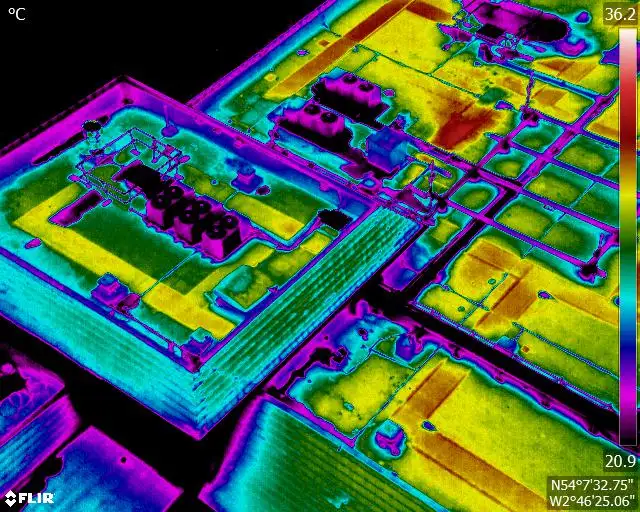
Flat roofs are the exception. A thermal flat roof inspection looks for wet insulation, which holds the day’s warmth for longer than dry insulation, so it is flown around two hours after sunset, following a dry and sunny day. Solar panels are different again: they are surveyed in bright daylight, while the system is generating.
How to Prepare the Building
- Keep the heating on. Run it for several hours beforehand, and ideally overnight before a dawn flight.
- Keep windows and outside doors closed over the same period, so the building is behaving as it normally would.
- Tell the people who need to know. Residents, staff, security and neighbours should expect a pilot and a drone outside after dark. We can supply a notification letter.
- Agree access. The pilot needs a safe place to take off and land and contact on the night.
Check Your Own Postcode
Our free tool lets you check the next good thermal night for your postcode. It reads the Met Office forecast for your location over the next seven days and scores each evening and dawn window as good, usable or poor, using the temperature, wind and rain rules described above.
Treat anything more than three days ahead as a guide only. We re-check the forecast the day before every thermal flight, and if the weather has turned, we rebook at no cost.
Who Reads the Images, and Why It Matters
A thermal image is easy to take and easy to misread. Reflections from glass and metal, a radiator behind a wall, a damp patch or a change of material can all look like missing insulation to an untrained eye.
That is why our thermal surveys are analysed and reported by thermographers qualified to Level 2 under BINDT’s certification scheme for thermographers. The certificate shows that a person can set the camera up correctly, judge whether the conditions were good enough, and tell a real fault from a false one. Our planning rules follow BS EN 13187, the British Standard for finding thermal irregularities in building envelopes with an infrared camera.
When a Thermal Survey Is Not the Right Tool
Thermal imaging shows patterns of surface temperature. It does not measure how much energy a building uses, and it does not give a rating. For that, find the building’s energy certificate (EPC) on GOV.UK, then use a thermal survey to see where the heat is actually going.
It is also the wrong tool for a slipped slate, a cracked chimney or a blocked gutter. Those need an ordinary high-resolution visual survey, which can be flown in daylight at any time of year.
What a Thermal Imaging Survey Costs
The cost depends on the size of the building and what you need back, not on the season. We survey single homes as well as blocks, schools and commercial buildings, and every job has a fixed quote before we fly. Current starting figures are on our thermal survey prices page.
Frequently Asked Questions
What is the best time of year for a thermal imaging survey?
For heat loss, October to March. The heating is on, and the nights are cold enough to give the 10°C difference between inside and outside that a reliable survey needs. Flat roof moisture surveys and solar panel surveys depend on sunshine instead, so they suit spring to early autumn.
Can a thermal imaging survey be done in summer?
A heat loss survey rarely works in summer because the building is nearly as warm outside as it is inside. Summer is the right time for thermal surveys that rely on the sun: finding trapped moisture in a flat roof after a hot, dry day and checking solar panels while they are generating.
What temperature difference does a thermal survey need?
We look for at least 10°C between the inside and the outside of the building, with the heating on for several hours before the flight. Between 7°C and 10°C the survey may still be usable. Below about 7°C the differences are too small for the camera to show defects reliably.
Can you do a thermal survey in the rain or wind?
No. Wet surfaces cool as the water evaporates, which creates false cold patches, and wind strips heat from the building so real defects fade. We need dry surfaces and light wind, ideally averaging 7 mph or less. If the forecast changes, we move the survey at no cost to you.
Book the Right Night, Not Just the Next One
Check the postcode tool for the next good window, then request a fixed quote. Send us the address, and we will confirm the price and the best night. Or call 0345 017 5592.