
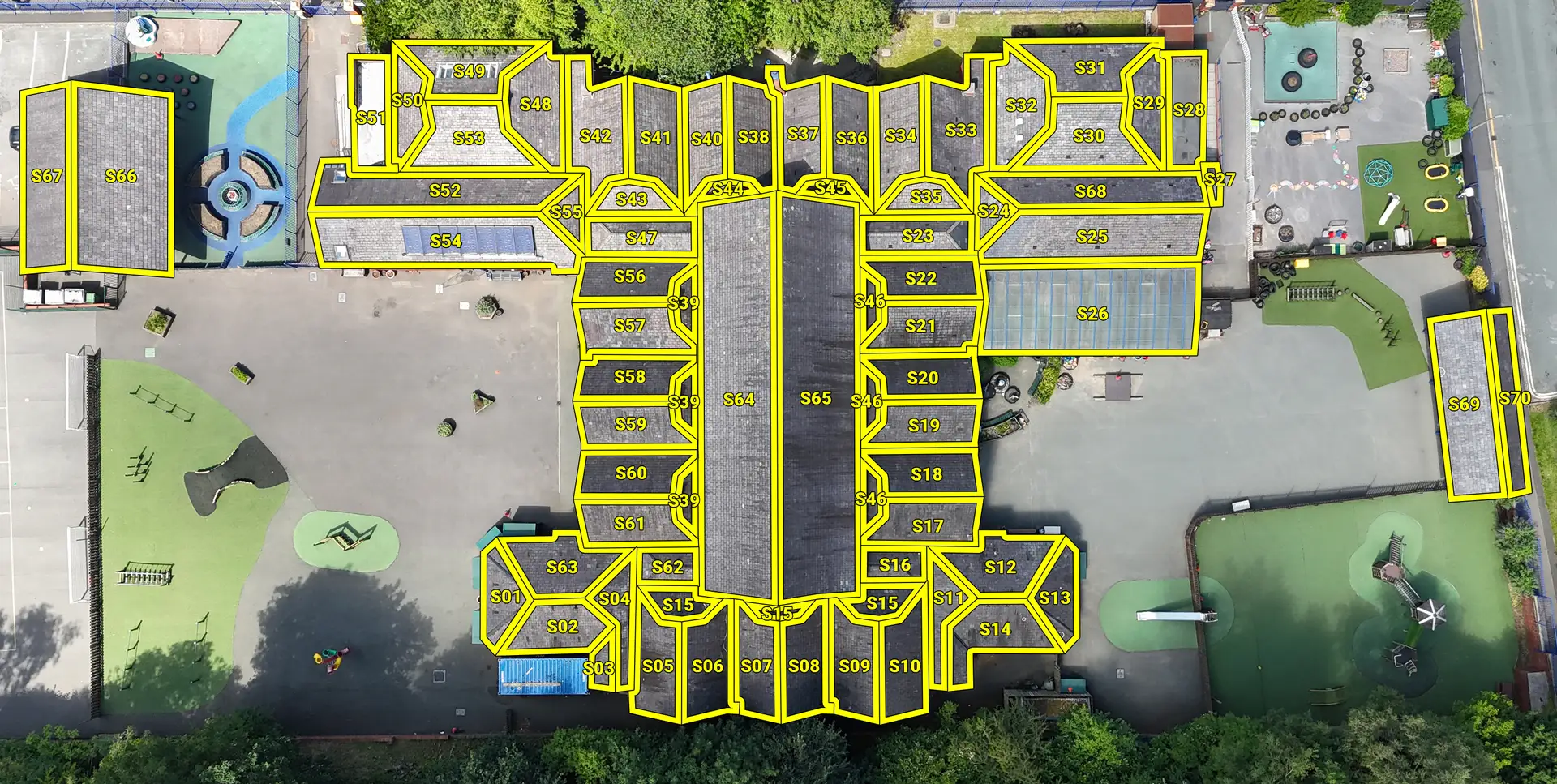
Hundreds of PFI agreements are coming to an end. As 25 to 30 year contracts expire, schools, hospitals, fire stations and council buildings return to public ownership in whatever condition they happen to be in. For the authorities taking them back, the PFI handback survey is the last real chance to establish that condition and hold the SPV to it.
The scale is considerable. The National Audit Office counted more than 700 operational PFI contracts and expected around 200 to expire within a decade of its 2020 report. Construction law firm Fenwick Elliott projects annual expiries peaking at 69 in 2036, by which point over 450 will have ended.
The Handback Standard can only be enforced while the contract is live. Miss a failing roof membrane or a corroded gutter run, and the repair bill lands on the public purse once the SPV’s cash flow winds down. What every party needs is a visual source of truth: complete, objective evidence of the estate’s condition on a specific date, which can be shared and acted upon.
The PFI Expiry Challenge: What’s at Stake at Handback
Most PFI contracts require assets to be returned in a specified condition, usually tested through a survey in the final years of the term. Three problems keep coming up:
Handback Standard non-compliance. Clauses often rely on loose wording such as “fully functional” or “operational”, leaving room to argue over repair versus replacement.
Hidden maintenance backlogs. Lifecycle spend can tail off near expiry. Failing roof coverings, blocked rainwater goods and perished sealants go unrecorded until they are expensive.
Liability disputes. Without a baseline record, it is hard to prove when a defect appeared, or whether it falls within the SPV’s obligations.
Time adds pressure. In March 2025 the NAO reported that public bodies were still showing a lack of preparedness for contract expiry. The same month, the Infrastructure and Projects Authority (now part of NISTA) published its PFI Asset Condition Playbook. It recommends preparing seven years out and surveying around five years before expiry. Many contracts only require a survey a year or two before the end date, which leaves little time to fund and complete the works it uncovers.
External Surveys: The Whole Building Envelope, Without Scaffolding
Roofs, high-level façades, parapets and gutters are where costly defects hide, and they are the hardest areas to reach. On a working PFI estate, scaffolding and cherry pickers bring lead times, exclusion zones across car parks, ambulance routes and playgrounds, and working-at-height risk. Fragile roof lights and steep pitches often limit surveyors to what is safely reachable, leaving gaps in the record.
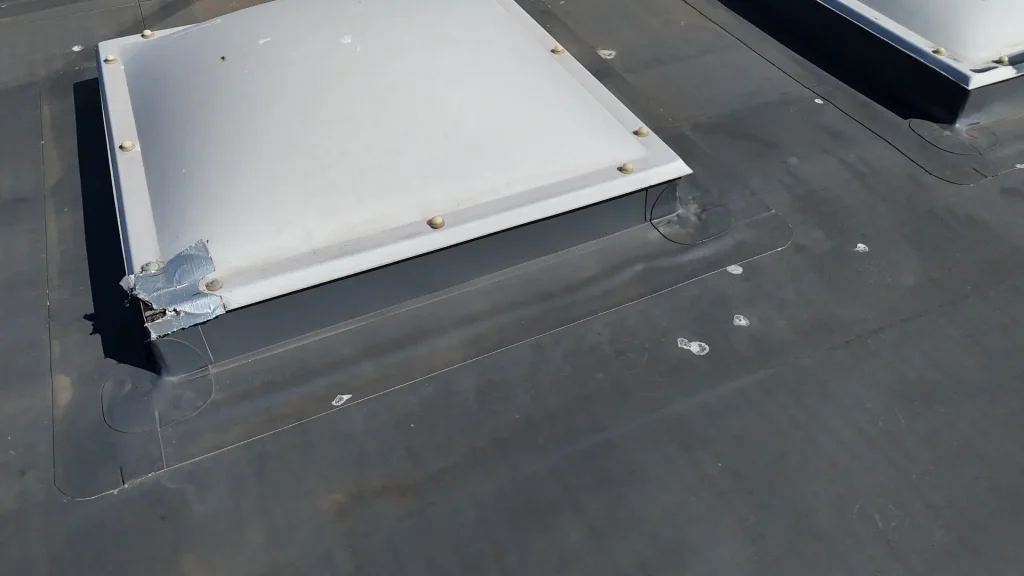
A drone survey removes those constraints. We capture overlapping, high-resolution imagery of the complete external envelope, including roofs, façades, gutters and roof plant, with nobody leaving the ground. Because each frame overlaps its neighbours, coverage is continuous rather than a selection of snapshots.
Surveyors can then zoom into individual components to isolate defects such as:
- slipped, cracked or missing tiles and slates
- splits, blisters and ponding on flat roof membranes
- blocked, sagging or leaking gutters and downpipes
- spalling masonry, open joints and failed pointing
- loose or damaged cladding panels and failed sealant joints
- deteriorated flashings, copings and plant supports
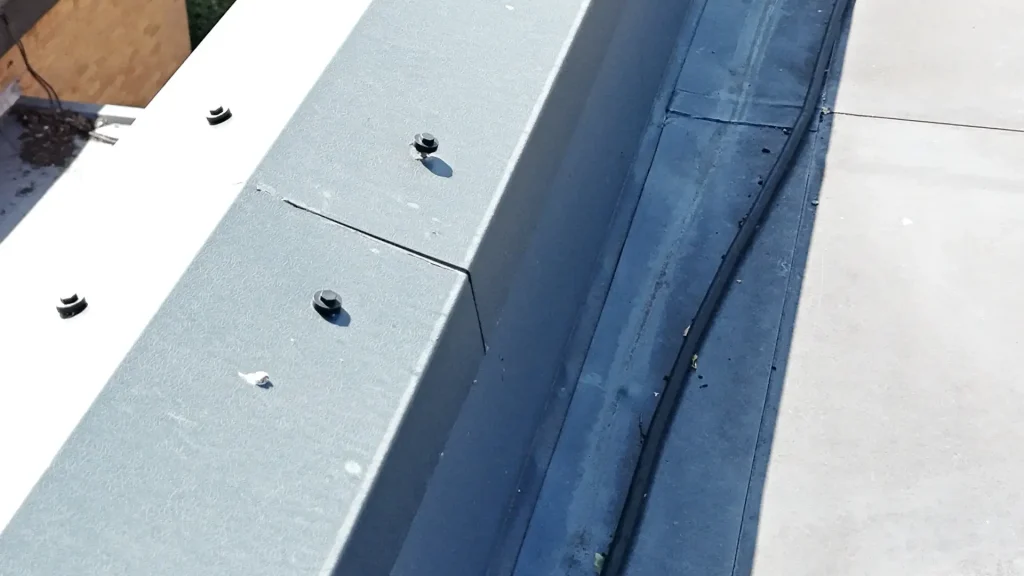
Each image carries location data, so every defect can be pinned to a specific elevation or roof area and compared with later surveys. A chartered surveyor still makes the condition judgement. The drone makes sure they can see everything.
Beyond Drones: Internal 360°, Matterport and LiDAR Surveys
Our name says drones, but our services have grown well beyond aerial work since we started. Today we also provide internal visual and data collection, so one team can capture a building inside and out. External and internal records share one format and one capture programme, with a single point of contact.
That matters at handback. The Playbook calls for a non-intrusive, room-by-room examination of all maintainable assets. On a hospital or school estate, that can mean thousands of rooms, many in constant use. We offer two complementary approaches, used separately or together.
360° and Matterport Imagery
Immersive 360° capture, or a full Matterport digital twin, records every room as a navigable virtual walkthrough. Finishes, ceilings, doors, windows, sanitaryware, visible M&E plant and fixed equipment are captured in context rather than as isolated photos.
Surveyors and clients can walk the building remotely, revisit any room on demand and tag issues for follow-up. Anyone with the link can view it in a browser, so the same record reaches surveyors, lawyers and FM teams at once.
LiDAR Scanning, Point Clouds and BIM
Where accurate geometry matters, internal LiDAR scanning produces a measured point cloud of the building. From that data we provide:
- point clouds
- 3D models
- Revit (BIM) models
- AutoCAD drawings, including floor plans, sections and elevations
After 25 years of alterations, as-built drawings may no longer match the building. The Playbook’s asset management compliance audit also checks whether information such as room data sheets and O&M manuals is adequate. Measured data closes that gap and gives the authority an accurate model to run the estate from after expiry.
All internal capture is scheduled around clinical sessions, school timetables and shift patterns. Working out of hours or zone by zone keeps wards, classrooms and appliance bays open.
A Visual Source of Truth, Fixed in Time
Every dataset we deliver is date-stamped. That matters at handback, because the question is rarely just what is wrong. It is what condition each element was in, and when.
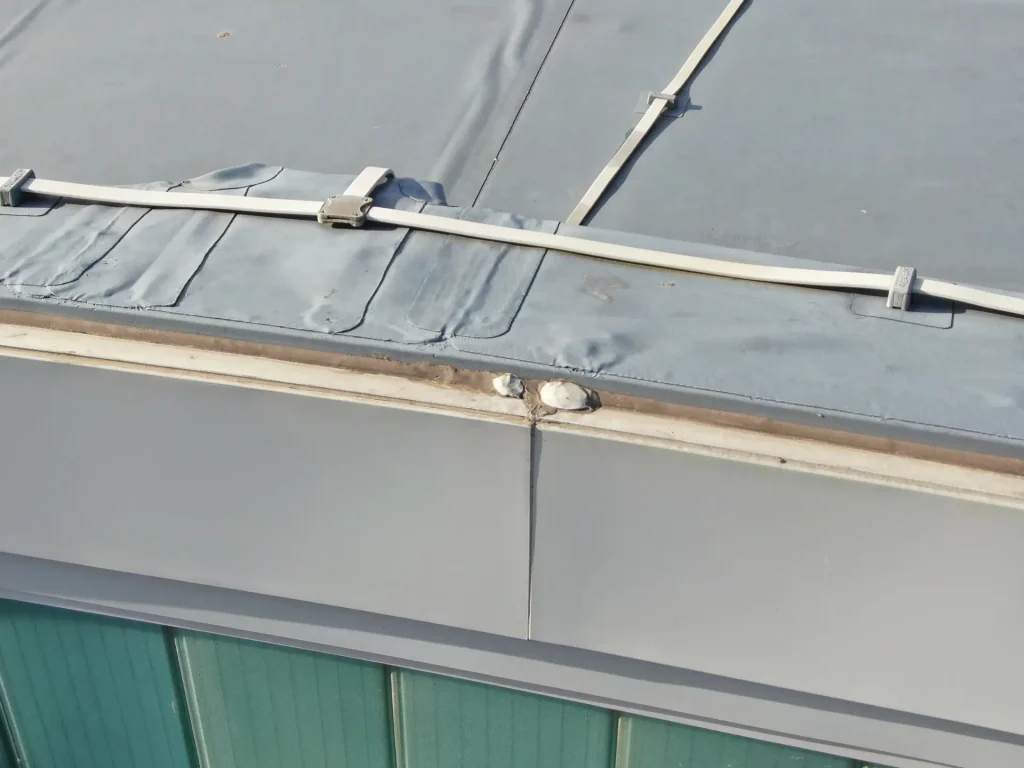
The Playbook encourages authorities and SPVs to jointly appoint a surveyor and reach “a single version of the truth” on asset condition. Dated imagery, virtual tours and measured models give that truth a visual form that everyone can share and act on. Repeat the capture at key milestones, such as the early condition survey, the contractual handback survey and final sign-off, and the record shows how the estate has changed as well as where it stands.
Disputes over whether a defect was “there all along” are far easier to settle when the images answer the question.
Who Uses the Data
Handback involves a wide group of stakeholders. Each needs the same evidence for different reasons:
- Local authority estates directors and asset managers price remedial works and plan their post-expiry estate strategy.
- NHS Trust estates and facilities directors assess clinical buildings without disrupting patient services.
- PFI project directors and SPVs demonstrate compliance and close out defects with before-and-after evidence.
- Facilities managers and FM operators plan remedial programmes and maintain an accurate asset record.
- RICS chartered surveyors and consultants grade condition against the Handback Standard from a complete dataset, focusing site time where hands-on inspection is needed.
- Technical advisers and cost consultants scope and price remedial works from measured drawings.
- Legal and commercial teams rely on an auditable, date-specific trail if retentions, deductions or remedial programmes are challenged.
- Incoming service providers and in-house teams take over the estate with accurate drawings, models and condition data from day one.
What Drone Site Surveys Delivers
| Inspection Service | Deliverable Options | Use at handback |
| Aerial drone image survey | Overlapping high-resolution imagery of roofs, façades and the full external envelope | Defect identification, fault analysis, condition grading, remedial scoping |
| 360° or Matterport capture | Navigable virtual tours of every room, shareable by link | Room-by-room condition review, remote inspection, issue tagging |
| Internal LiDAR scanning | Point clouds, 3D models, Revit models, AutoCAD drawings | Accurate as-built record, post-expiry estate management |
Plan your PFI Handback Survey with Drone Site Surveys
Whether your PFI agreement ends in two years or seven, start with a reliable, date-stamped baseline. The earlier you capture it, the more options you have to agree remedial works, set handback retentions and plan the transition.
Book a consultation or site audit to discuss your PFI handback survey. We’ll talk through your contract timeline, the buildings in scope and the outputs your surveyors and advisers need. Then we’ll agree a capture plan that keeps your sites running.
Book a PFI handback consultation: https://dronesitesurveys.co.uk/contact/